Best Universities in Australia with Ranking & Fees
Australia is home to some of the world’s most prestigious universities, attracting students from all corners of the globe.
With a strong emphasis on academic excellence, research innovation, and industry collaboration, Australian universities consistently rank among the best worldwide.
The country offers a diverse and welcoming environment for students, along with robust post-study work opportunities that make it an appealing choice for international education.
In this comprehensive guide, we’ll explore the top universities in Australia, focusing on specific disciplines such as engineering, law, business, medicine, and creative arts.
Whether you're an aspiring engineer, a future lawyer, or a business leader in the making, this guide will help you identify the best universities in Australia for your chosen field of study.
Top Universities in Australia - Overview
Australia has 44 universities, including six in the top 50 of global university rankings. These institutions are known for their high teaching standards, cutting-edge research, and industry-oriented programs.
The Group of Eight (Go8) represents Australia’s leading research-intensive universities, similar to the Ivy League in the U.S.
Global Recognition: Universities in Australia regularly rank in the QS World University Rankings and Times Higher Education Rankings for their academic and research excellence.
Diverse Student Population: Australia attracts over700,000 international students annually, making it one of the most popular study destinations.
Strong Industry Linkages: Many universities have internship programs, research collaborations, and employment pathways with top companies worldwide.
Government Support: The Australian government provides scholarships, research grants, and post-study work visas to support students.
Now, let’s explore the top universities in Australia based on different fields of study.
Top 5 Universities for Engineering Courses
Australia is a leading destination for engineering education, with universities offering world-class programs in civil, mechanical, electrical, and software engineering.
These programs emphasize practical learning, industry partnerships, and global research collaborations.
Australian universities offer world-class law programs that are recognized globally. These institutions provide comprehensive curricula that cover various legal systems, critical thinking, and practical skills through moot courts and internships.
Top 5 Universities for Business and Management Courses
Australia's business schools are acclaimed for their innovative teaching methods and strong industry connections.
They offer a range of programs in business administration, finance, marketing, and entrepreneurship, preparing students for leadership roles in the global market.
Top 5 Universities for Medicine and Health Courses
Australia's medical schools are globally recognized for their research output and comprehensive clinical training programs.
They offer degrees in medicine, dentistry, nursing, and allied health sciences, with curricula that integrate theoretical learning with practical experience.
Top 5 Universities for Creative Arts and Design Courses
Australia is home to several prestigious institutions renowned for their excellence in creative arts and design education.
These universities offer comprehensive programs that blend traditional techniques with modern innovations, providing students with a robust platform to hone their artistic skills and express their creativity.
University of Melbourne – Victorian College of the Arts (VCA)
#13
UG: AUD 43,198 (INR 23.75L)
PG: AUD 36,128 (INR 19.87L)
Research Excellence in Australian Universities
Australia is a global leader in scientific and technological research, with its universities making groundbreaking contributions across multiple fields.
Australian research institutions collaborate with industries, government bodies, and international organizations, leading to impactful discoveries that shape global policies, healthcare, technology, and environmental sustainability.
These universities receive significant research funding from both national and international sources, further solidifying their status as pioneers in innovation and knowledge creation.
University
Research Specialization
Notable Achievements & Contributions
University of Melbourne
Medical and Biomedical Research
Leading advancements in cancer treatment, regenerative medicine, and neuroscience.
Home to the Doherty Institute, a global leader in infectious diseases and immunology.
Significant contributions to stem cell research and precision medicine.
Australian National University (ANU)
Public Policy, Climate Change, and Astronomy
Strong influence on public policy and governance, with research shaping economic and foreign policies.
Leads global climate change and environmental sustainability studies.
Houses the Mt. Stromlo Observatory, contributing to astrophysics and space research.
University of Queensland (UQ)
Vaccine Development and Biotechnology
Developed the COVID-19 vaccine candidate using the molecular clamp technology.
Pioneering research in nanotechnology, bioengineering, and agricultural sciences.
Home to the Australian Institute for Bioengineering and Nanotechnology (AIBN).
University of Sydney
Artificial Intelligence (AI) and Robotics
Leads research in AI ethics, automation, and machine learning applications.
Developed assistive robotic technologies for healthcare and aged care.
Partnered with global tech firms for advancements in cybersecurity and data analytics.
Monash University
Pharmaceutical and Renewable Energy Research
Played a key role in developing the first mRNA vaccine manufacturing facility in Australia.
Researching next-gen solar cells, battery storage, and hydrogen energy solutions.
Collaborated with NASA on space medicine and physiology studies.
Research Funding and Innovation Hubs
Group of Eight (Go8) universities receive over 70% of Australia’s competitive research funding.
University-based research institutes, such as the Peter Doherty Institute for Infection and Immunity (University of Melbourne) and the Walter and Eliza Hall Institute (Monash University), drive medical breakthroughs.
Innovation precincts like the Melbourne Biomedical Precinct and Sydney’s Tech Central foster startups and industry collaboration.
Admission Requirements for Top Universities in Australia
Admission to Australian universities is based on academic qualifications, English language proficiency, and, in some cases, standardized test scores.
Requirements vary by university and program, with competitive courses having higher eligibility criteria. International students must also meet visa and financial requirements.
Detailed Admission Requirements
1. Undergraduate Programs
To apply for a bachelor's degree in Australia, students must fulfill the following criteria:
Academic Qualification: Completion of high school with required grades (equivalent to Australian Year 12).
English Language Proficiency:
IELTS: Minimum 6.0–6.5 (varies by course and university).
3. Additional Requirements for International Students
Statement of Purpose (SOP): A personal statement explaining academic goals and reasons for choosing the program.
Letters of Recommendation (LORs): Required for postgraduate admissions, usually from professors or employers.
Portfolio (for Creative Arts and Design Courses): A collection of previous work for assessment.
Visa Requirements: Confirmation of Enrollment (CoE) from an Australian university to apply for a student visa (Subclass 500).
Financial Proof: Evidence of sufficient funds to cover tuition fees and living expenses.
Meeting these admission requirements ensures a smooth application process for international students aspiring to study in Australia.
Scholarships and Financial Aid for International Students
Australia offers a wide range of scholarships and financial aid options to help international students, particularly Indian students, fund their education.
These scholarships are provided by the Australian government, universities, and private organizations to support academic excellence, research contributions, and financial need.
Most scholarships cover tuition fees, while some also provide living expenses, travel allowances, and health insurance.
Indian students can apply for merit-based, need-based, and research-specific scholarships, significantly reducing the cost of studying in Australia.
Below is a list of top scholarships available exclusively for international (Indian) students.
Scholarship Name
Offered By
Award
Australia Awards Scholarships (AAS)
Australian Government (Department of Foreign Affairs and Trade)
Covers full tuition fees, living expenses, health insurance, and travel costs.
Destination Australia Scholarship
Australian Government
Up to AUD 15,000 per year for students studying in regional Australia.
India Global Leaders Scholarship
University of Queensland
50% tuition fee waiver for high-achieving Indian students.
Monash International Merit Scholarship
Monash University
AUD 10,000 per year for the entire course duration.
Deakin Vice-Chancellor’s International Scholarship
Deakin University
100% or 50% tuition fee waiver based on academic merit.
Macquarie University India Scholarship
Macquarie University
AUD 10,000 per year towards tuition fees.
UNSW Future of Change India Scholarship
University of New South Wales (UNSW)
AUD 10,000 per year towards tuition fees.
Melbourne International Undergraduate Scholarship
University of Melbourne
Partial or full tuition fee waiver based on academic performance.
ANU College of Business & Economics India Excellence Scholarship
Australian National University (ANU)
50% tuition fee reduction for the entire course duration.
Adelaide Global Excellence Scholarship
University of Adelaide
50% tuition fee waiver for academically outstanding students.
How to Apply for Scholarships
Check eligibility criteria: Each scholarship has different academic and financial requirements.
Prepare documents: Most scholarships require academic transcripts, proof of English proficiency, a Statement of Purpose (SOP), and Letters of Recommendation (LORs).
Submit applications on time: Many scholarships have strict deadlines, so early application is recommended.
Maintain academic performance: Some scholarships require students to maintain a certain GPA to continue receiving funding.
Career Opportunities After Graduating from Australian Universities
Graduating from an Australian university opens the door to a world of career opportunities, as Australian institutions are known for producing highly skilled and globally competitive graduates. The Australian job market offers diverse roles across industries such as technology, healthcare, engineering, business, and creative arts.
In addition to competitive salaries, graduates benefit from Australia's robust work environment, high living standards, and a growing demand for skilled professionals.
As a graduate, you’ll have access to several career services offered by universities, including job placement assistance, internships, networking opportunities, and mentorship programs.
Many universities also have strong connections with top industries, providing students with direct access to potential employers even before graduation.
Top Career Opportunities for Graduates
Technology Sector: Australia has a thriving tech industry, with high demand for professionals in fields such as artificial intelligence, data science, software engineering, and cybersecurity.
Healthcare and Medical Fields: Graduates with qualifications in medicine, nursing, and allied health professions have numerous job opportunities due to Australia's aging population and ongoing healthcare demands.
Engineering and Construction: Australia is investing heavily in infrastructure projects, offering significant opportunities for civil, electrical, and mechanical engineers.
Business and Finance: With Australia’s status as a global financial hub, business, and finance graduates can pursue roles in management, consulting, accounting, and investment banking.
Education and Research: Australian universities and research organizations offer ample opportunities for graduates interested in teaching, research, and policy development roles.
After graduation, international students may be eligible for the Post-Study Work Visa (subclass 485), which allows them to stay in Australia for up to four years (depending on the qualification) to gain valuable work experience.
This provides a pathway to permanent residency through the Skilled Migration Program if the graduate meets the requirements for occupations in demand.
Universities also offer career development services, including job fairs, workshops, and direct job placement assistance, helping graduates transition smoothly into the workforce.
Graduating from an Australian university gives you a competitive edge in the global job market, with employers seeking individuals with the knowledge, skills, and innovative mindset nurtured in Australia’s top universities.
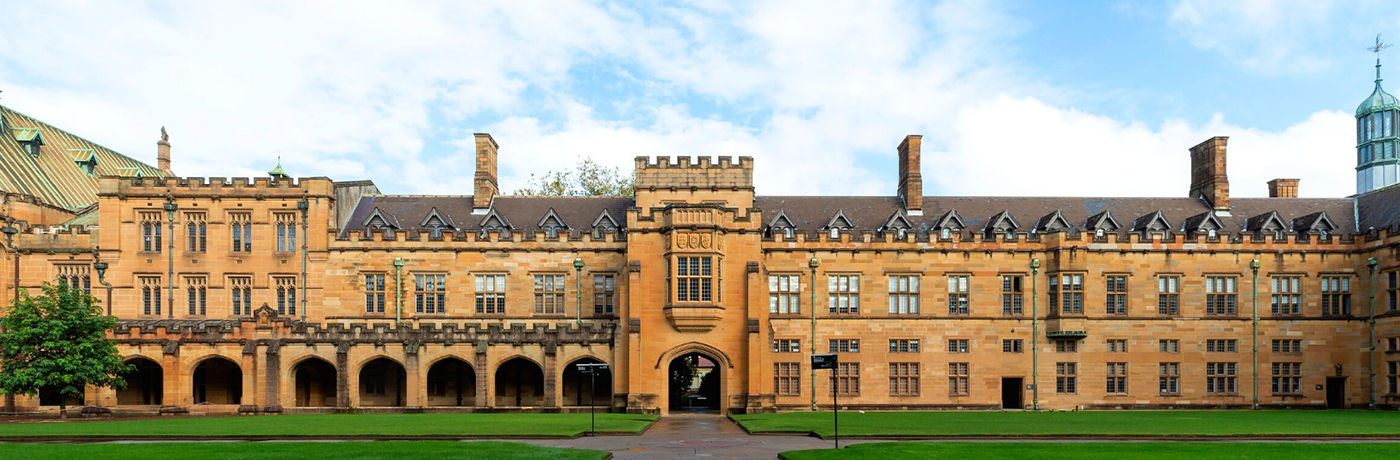
The University of Sydney is one of the top comprehensive research and teaching universities globally. The university offers a range of disciplines, with over 400 study areas and more than 70,000 students. The University of Sydney has its main campus named Camperdown in Australia.
The University of Sydney (USYD) or the Sydney University, located in Sydney, Australia, is a public research university. The USYD comprises eight university schools and academic faculties, offering masters, baccalaureate and doctoral degrees. The ranking of the University has been consistently high both internationally and nationally. It is among the world’s first universities to have admitted students entirely on the basis of academic merit.
Among the most prestigious universities in the world, Carnegie Mellon is a private, international research university that forges its own path. More than 400 CMU-affiliated firms have raised more than $7 billion in follow-on funding in the last ten years. The magnitude of Pittsburgh's expanding autonomous vehicle cluster, which includes Waymo, Motional, Uber, Aurora, and Aurora, is what makes those investment figures particularly significant. These companies are all based in Pittsburgh thanks to their close ties to CMU. CMU doesn't just see the future—they create it. With cutting-edge brain science, ground-breaking performances, creative startups, driverless cars, big data, lofty goals, Nobel and Turing prizes, experiential learning, and a ton of robots.
Over the past few years, Monash has put its efforts into growing its research abilities in key fields like health sciences, engineering, data science, and environmental sustainability. The world has taken notice of these steps, as the university keeps its spot among the top 50 schools worldwide.
Monash is an advanced, international, research-focused institution that offers top-notch instruction and research across the Indo-Pacific region and in Australia. Whether it is by reducing geopolitical unrest, promoting healthy communities, or mitigating climate change, Monash is having a beneficial effect on today's global issues.
Together, the dynamic and diverse community of 158 countries, comprising 86,000 students, 17,000 faculty members, and over 490,000 alumni, is bringing about meaningful change. Monash must become ingrained in the communities they serve if they are to have a worldwide influence. They have six campuses, three overseas teaching locations, and more than one hundred partner universities.
Highlights of Monash University
Established
1958
Website
www.monash.edu
Also Known As
QS Ranking
#42
US News & World Report- Global University Ranking
#35
Times Higher Education (THE) Ranking
54th
Accepted Exams
IELTS, TOEFL, PTE, GMAT GRE (depends on the program)
Total No. of Students
More than 86,000
Scholarships
Over 200 kinds on awards
Student-Teacher Ratio
22:1
Contact Information
Phone: +61 3 9902 6000
Email: study@monash.edu
Address: 21 Chancellors Walk Clayton, Victoria 3800 Australia
Latest About Monash University
Monash University based in Melbourne Australia, keeps strengthening its standing as a world-class center for learning and discovery in 2024. Students from all over the globe choose Monash because of its fresh take on teaching tight links with industry, and far-reaching global connections. The university stretches beyond Australia, with campuses in Malaysia, China, India, and Italy. It also teams up with schools around the world.
History of Monash University
Monash University came into existence in 1958. It got its name from Sir John Monash, an engineer, military leader, and public administrator who had a huge impact on Australian history. In the 1990s, Monash started to expand . It set up campuses in Malaysia and South Africa and teamed up with universities worldwide.
These days, Monash University operates on a global scale boasting over 100 international partners, several campuses, and students from all walks of life.
Mission: Monash University aims to make the world better by pushing the boundaries of knowledge and sparking new ideas.
Vision: Monash University wants to be seen as a top-notch global university that encourages curiosity, leads the way in sustainable growth, and tackles the biggest challenges facing our world.
Core values:
Excellence: Monash aims for top quality in everything it does, from studies to teaching and community work.
Integrity: The university works and follows the highest moral rules in research, education, and management.
Diversity: Monash values different backgrounds and wants to create a welcoming place where all kinds of people can succeed.
Collaboration: The university believes working together is powerful and partners with businesses, the government, and other schools to reach shared goals.
Popular Courses
Some of the popular courses at Monash University:
Bachelor of Engineering (Honours)
Bachelor of Business
Master of Data Science
Master of International Relations
Doctor of Philosophy (PhD) in Medicine
Monash University Placements
Monash University boasts an impressive record of graduate employability. Many students find jobs within six months after they finish school. The university's Career Connect service gives students lots of help. This includes internships, job placements, and career advice. These services make sure students are ready for work. Big companies like Deloitte, PwC, ANZ, and IBM often hire Monash graduates.
Monash University Campus Life
Monash University offers a lively campus experience, with many clubs, societies, and events that appeal to diverse interests. The university boasts cutting-edge facilities, including up-to-date libraries, research hubs, sports centers, and student housing. The Clayton campus, which is the biggest, stands out for its wide green areas and creative learning spaces.
Monash University Alumni
Monash University has a worldwide network of more than 400,000 alumni who have achieved success in different fields. Some well-known alumni include:
Daniel Andrews - Premier of Victoria
Tim Flannery - Environmentalist and Scientist
Helen Szoke - Former Chief Executive of Oxfam Australia
Monash University Faculty
Monash University has top-notch faculty that includes leading researchers, industry professionals, and experienced educators. The university's faculty members do research to tackle global challenges, and they use their know-how in class to give students a valuable learning experience.
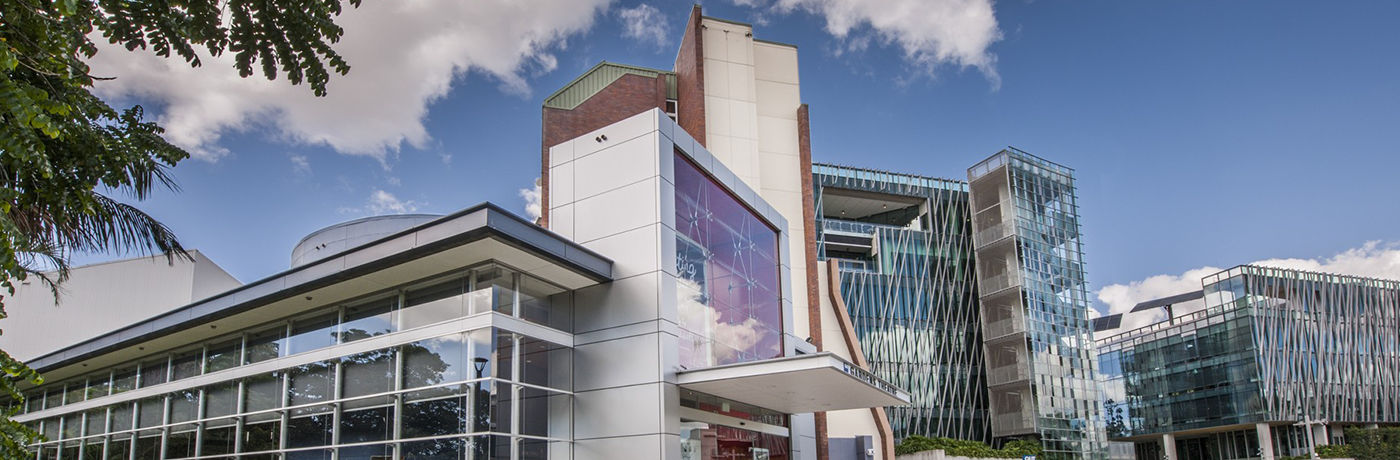
Queensland University of Technology is an Australian university, situated in Brisbane that seeks to equip students with industry-oriented knowledge to succeed in this competitive and challenging world. With more than 50,000 students, the university offers world-class infrastructure and career-centered curriculum to students.
The Queensland University of Technology, Australia, campus offers various amenities to students such as restaurants, cafes, bars, swimming pool, pharmacy, bookshops and more. The Queensland University of Technology offers more than 100 undergraduate, postgraduate and doctoral programs with cutting-edge curriculum. The university also has a list of notable alumni pioneering in various fields.
La Trobe University is a public research university in Melbourne, Australia. It was named after Charles Joseph La Trobe, the first Lieutenant Governor of Victoria, and was established in 1964. The university provides a diverse range of undergraduate and postgraduate studies in business, education, health sciences, humanities, law, science, and engineering.
James Cook University, Brisbane Campus is a modern high rise building, centrally located in the Central Business District (CBD) on Queen Street. It is ranked #462 by QS World University Rankings 2021. The university is ranked among the top 30 young universities by the Times Higher Education Best Young Universities in the World 2020, and its campuses are equipped with innovative services, research, as well as teaching and learning facilities for students. Over 21,500 students from more than 100 countries study at JCU’s campuses.
Australian Catholic University (ACU) is a public university located in Melbourne, Australia. Ranked between 801 and 850 by QS World Rankings, the university has flourished over the past few years, and now has seven campuses around Australia, and a campus in Rome, Italy.
The university offers several study areas for students to choose from. Some of these areas include- Arts, Education, Business, Commerce and Information Technology, Health and Exercise Science
With a total student body of 23,750, the university has 4,788 international students out of which 83% are enrolled in UG courses and the rest 17% are PG students.
Apart from this, the university is committed to building professional relationships. Holding partnerships with around 200 institutions across the world, ACU aspires to grow as a community.
The University of New England is a public educational institution that came into existence in 1954 at Armidale in Australia. It is known for its robust academic curriculum and infrastructure. It is ranked at 1001-1200th in the QS World University Rankings list for 2025. It was the first regional university in Australia, with its journey starting with David Henry Drummond’s election in 1920.
The university is accredited by the Australian Securities and Investments Commission (ASIC), Professional Accounting Recognition, and Financial Planning Association of Australia. There are 100,000 alumni and 22,389 students, along with 1,3808 staff members and nine academic schools in the university. There are 14,439 undergraduate students and 5,915 postgraduate students.
The University’s main campus is at Armidale, along with regional centers in Sydney, Taree, Tamworth, and other locations. Its research centers include the Centre for Agribusiness, Australian Centre for Agriculture and Law, New England Institute of Healthcare Research, Cotton Hub at UNE, The National Centre of Science, Information and Communication Technology, and Mathematics Education for Rural and Regional Australia, Cotton Research and Development Corporation, and others.
The University of New England has 140+ course options for students, spanning 12 areas of study. These include IT and data science, earth and environment, animals and agriculture, languages, linguistics, international programs, humanities and arts, social sciences, law and criminology, and psychology and mental health.
Notable alumni include the CEO, en Gonzalo Perez del Castillo International Consulting, Professor John Gillies from the Department of Literature Film & Theatre Studies, University of Essex, UK, President, Graduate Women NSW, Ms. Tricia Blombery, and Foundation Director at the MARCS Institute, Western Sydney University, Professor Denis Burnham.
The University offers various employability and career services for its students. Students get assistance in enhancing their employability quotient while finding available job opportunities simultaneously. Employers can also get assistance in posting jobs and recruiting eligible students from the institution. The UNE Careers Toolkit also helps students understand their career goals and offers valuable information and resources. Students can also opt for career assessment options while choosing the right educational and professional pathways. Students can also get help with job applications and resumes, interviews, presentations, teamwork, global job searches, and networking.
All information provided on this page is for general use and upGrad Abroad is not responsible for any errors or omissions. The Universities involved in this Program are accredited/recognized in the countries where they are established. Relevant terms and conditions apply.Any action taken upon the information found on this website is strictly at your own risk.

 GPA CALCULATOR
 EXPENSE CALCULATOR
 Ielts band calculator
 Education Loan Calculator
 University partner
 ACCOMMODATION
 experience-center
 our offices